Help After Leaving hospiTal (HALT)
The Help After Leaving HospiTal (HALT) delirium rehabilitation program is a multidisciplinary, scalable, and tailored rehabilitation intervention designed for older adults who have experienced delirium during hospitalisation and do not have dementia. The program aims to reduce cognitive decline and frailty and to support health and wellbeing following delirium. HALT was developed through a multistage co-production process involving people with lived experience of delirium and their support persons, healthcare professionals, and discipline experts. Development included initial stakeholder consultations (2020–2021), focus groups and interviews (2024–2025), and workshops (2025). Evaluation of the program’s feasibility and acceptability is currently underway (2026–2028). The development process was guided by the British Design Council’s Double Diamond Framework and informed by the Medical Research Council (MRC) Framework for developing and evaluating complex interventions.
The program
HALT is delivered remotely, facilitated by a health professional through phone calls or virtual sessions, enabling scalability and accessibility. The program comprises three essential modules (delirium education, vision and hearing, and medications) and five optional modules (cognitive engagement, physical functioning, wellbeing, sleep, and nutrition and hydration).
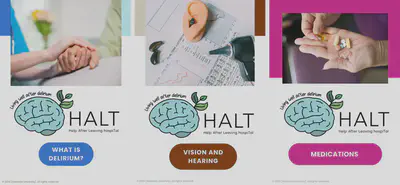
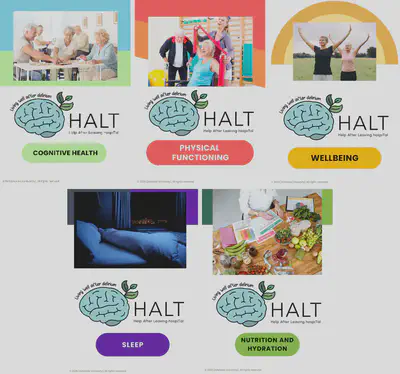
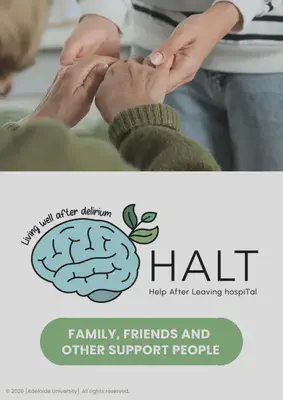
The program comprises educational and activity-based content, alongside a family, friends and other support people booklet. The programme is designed to support healthy behaviour change and provide delirium education, drawing on two complementary frameworks: the COM-B model and motivational interviewing. Modules comprise two to eight sessions and are delivered sequentially. The intervention commences when delirium resolves and the program user is ready, and involves support persons where available.
The HALT team

Our funders and partners
We thank our funders The Hospital Research Foundation (2024–6) and The Northern Community Health Research Foundation (2026–8).

Professor Hannah Keage
Principal Investigator & Co-Director CAIN
I research the neurophysiology of cognitive ageing and delirium to develop evidence-based programs that support cognitive health in communities.